The Artist · b. 1973, Trebinje
Predrag
Popara
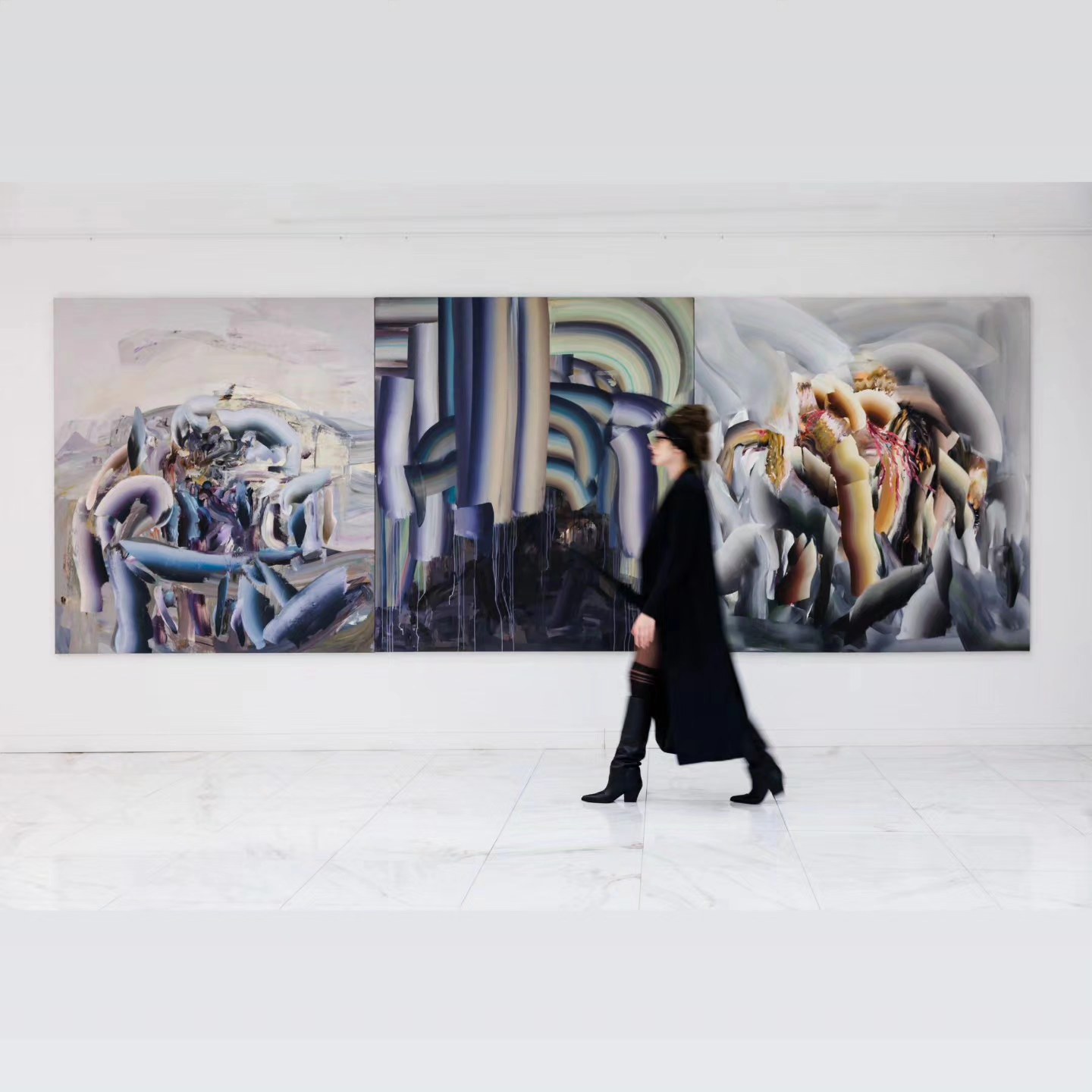
A painter whose work explores transformation, identity, memory, and the psychological tension of modern life. Working between abstraction and figuration, between construction and collapse.
Biography
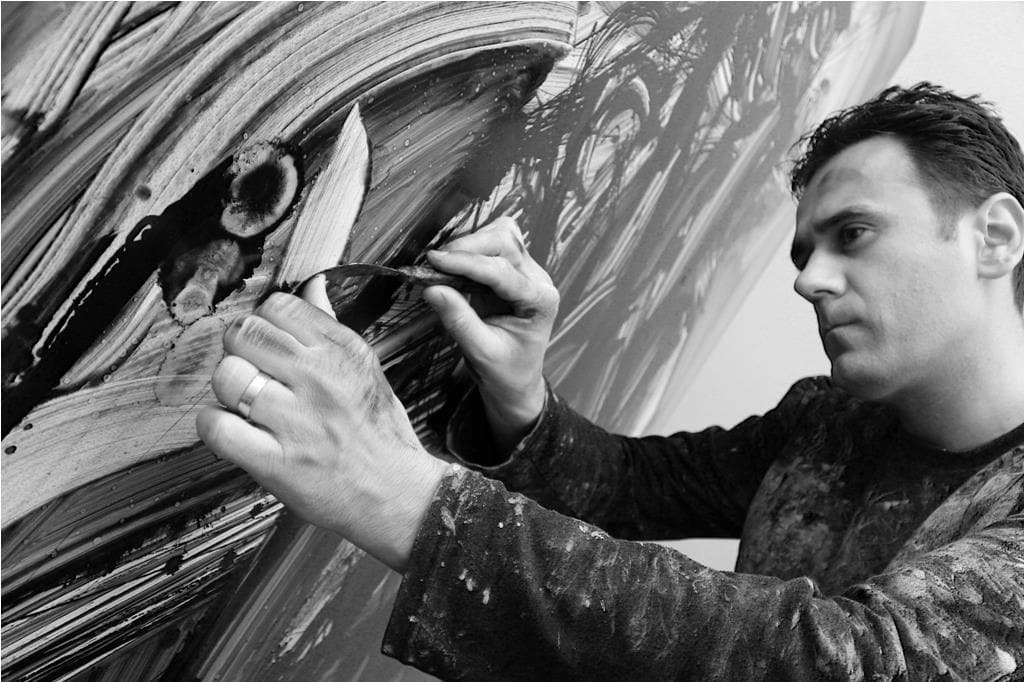
Predrag Popara is a contemporary Serbian painter whose work explores transformation, identity, memory, and the psychological tension of modern life. Born in Trebinje in 1973, Popara built his artistic path between the cultural landscapes of the Balkans and Central Europe.
He graduated from the Faculty of Applied Arts in Belgrade in 1999, later continuing his studies and specialisation in Vienna and Berlin, where he worked alongside influential European artists and professors including Maria Lassnig, Christian Ludwig Attersee, and Adolf Frohner. These formative years shaped a practice that combines strong painterly gestures with philosophical and existential themes.
Over the past two decades, Popara has exhibited extensively throughout Europe — Serbia, Austria, Germany, France, Italy, Romania, Hungary, Slovenia, and Bosnia and Herzegovina. His paintings often move between abstraction and figuration, creating unstable, shifting spaces that reflect the anxieties and transformations of contemporary society.
In 2013, a visit to Bucharest unexpectedly reshaped both his personal and professional life. That experience led him to co-found Funnel Contemporary Art, a platform dedicated to connecting Southeast European artists and creating new regional cultural networks outside traditional Western centres.
Today, Popara lives and works between Belgrade and Bucharest, continuing to develop a body of work that confronts the instability of contemporary existence while searching for traces of humanity, spirituality, and transformation beneath the surface of modern life.
“His paintings exist somewhere between memory and rupture, intimacy and chaos — spaces where destruction and rebirth coexist.”
The Story
His journey began far from the major European art capitals, in the historic town of Trebinje, where landscapes, memory, and cultural crossroads would later become recurring undercurrents in his work. From an early age, he was drawn not simply to representation, but to the psychological force of painting — to the idea that images could carry tension, fragility, and transformation all at once.
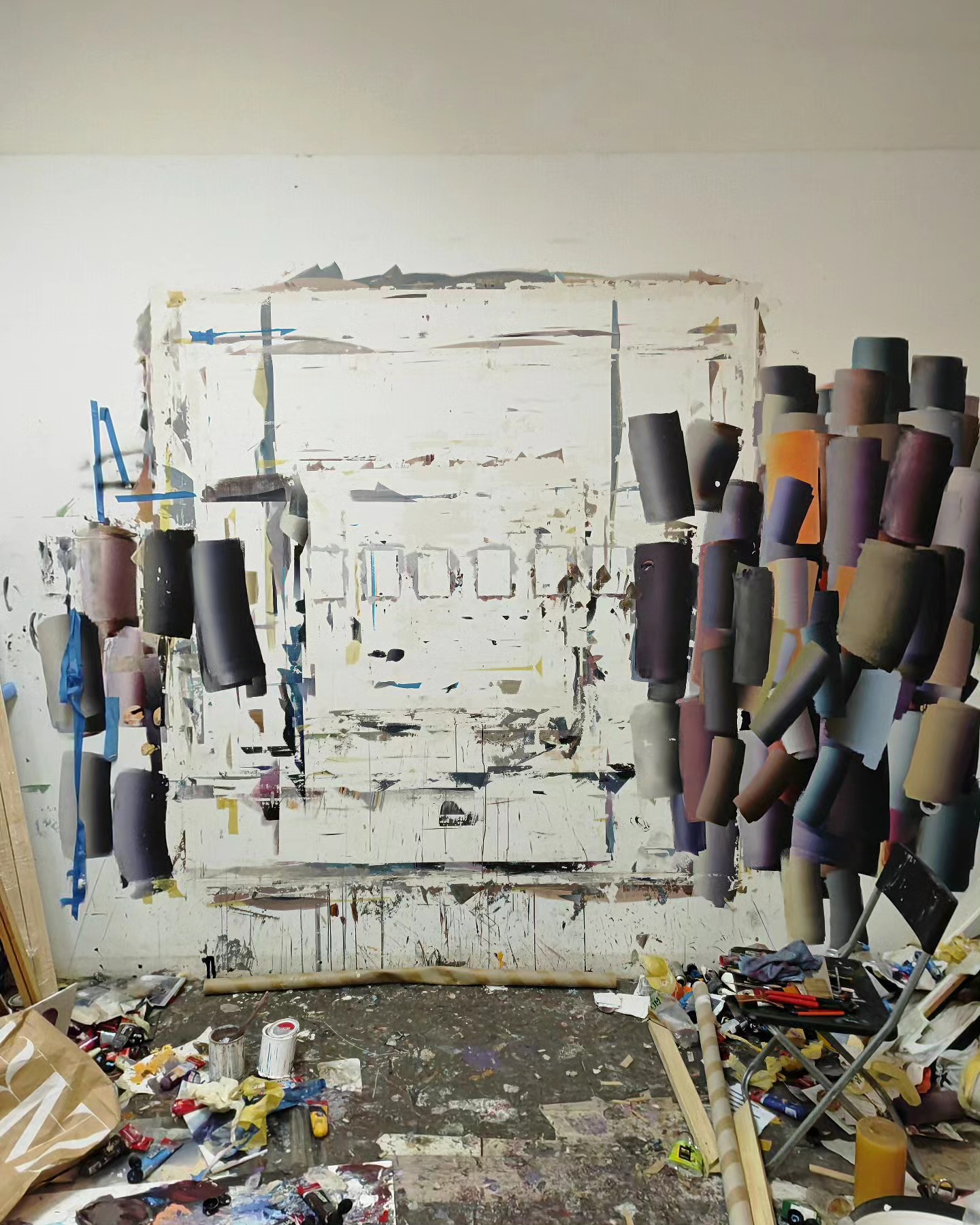
After moving to Belgrade to study at the Faculty of Applied Arts, Popara developed a rigorous technical foundation while searching for a more personal visual language. His later studies in Vienna and Berlin exposed him to a broader European artistic discourse — painting confronting identity, fragmentation, media saturation, and the collapse of traditional narratives.
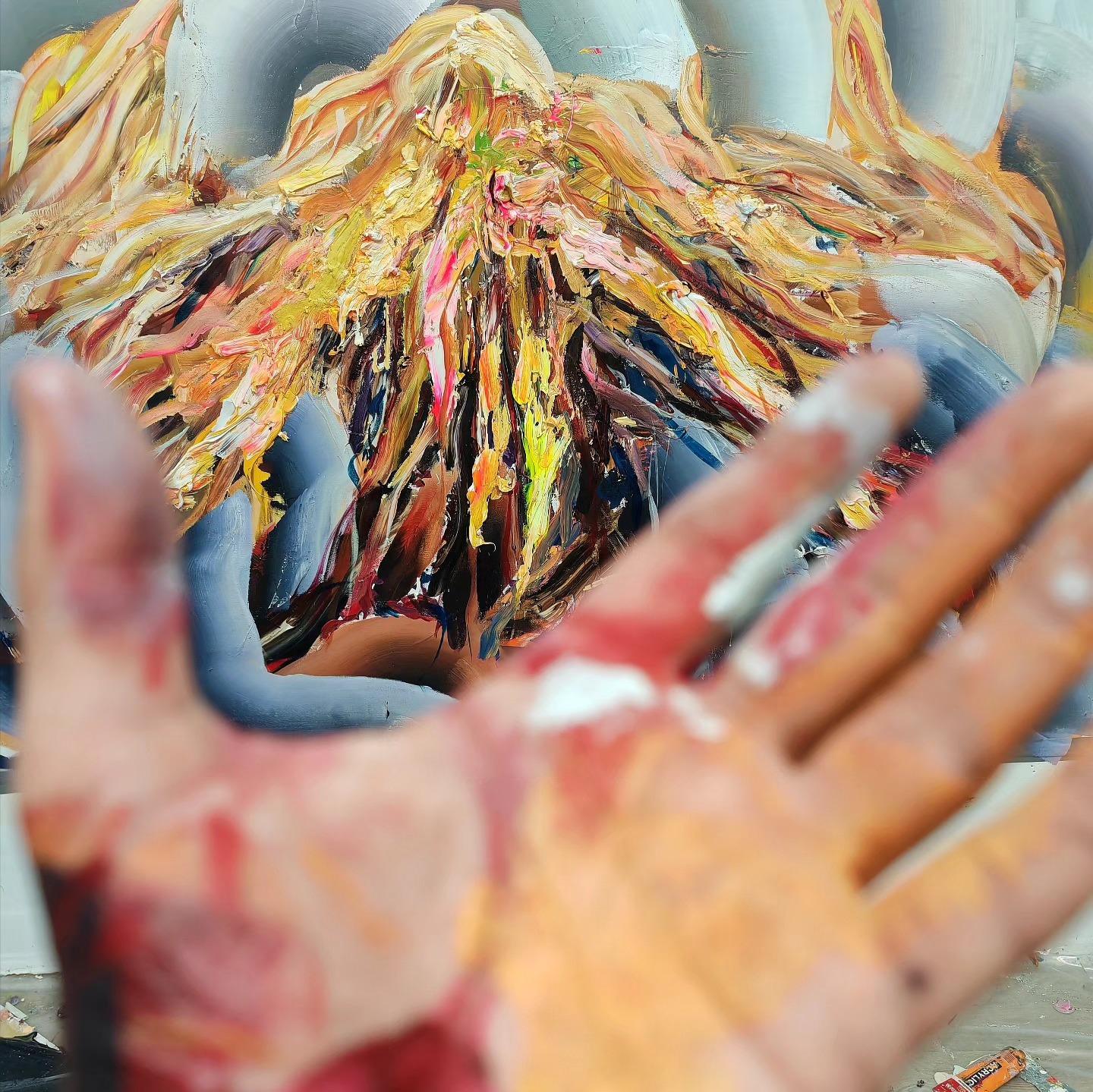
Rather than follow trends, Popara gradually built a distinct painterly world — fractured forms, unstable figures, and emotionally charged surfaces. His paintings feel suspended between construction and collapse, reflecting the uncertainty of the contemporary human condition.
A defining turning point came in 2013, when a visit to Bucharest unexpectedly reshaped both his personal and professional life. That experience led him to co-found Funnel Contemporary Art, a platform dedicated to connecting Southeast European artists.
Projects such as Genesis and Island on Firefurther established Popara as an artist concerned with the instability of modern civilisation and the accelerating transformation of humanity itself. His works ask what remains human in a world shaped by technological acceleration, political fragmentation, and psychological overload.
Timeline
- 1973Born in Trebinje.
- 1998First Prize for Drawing, Belgrade.
- 1999Graduates from the Faculty of Applied Arts, Belgrade.
- 2000sSpecialisation in Vienna and Berlin — Maria Lassnig, Christian Ludwig Attersee, Adolf Frohner.
- 2013Co-founds Funnel Contemporary Art in Bucharest.
- 2018Genesis cycle — meditations on origin and erosion.
- 2022Island on Fire — works on civilisational acceleration.
- TodayLives and works between Belgrade and Bucharest.
Cultural Geography